2026-09-18 · Mike Reynolds
How to Prepare Your Sump Pump for Dayton Winter Freezes
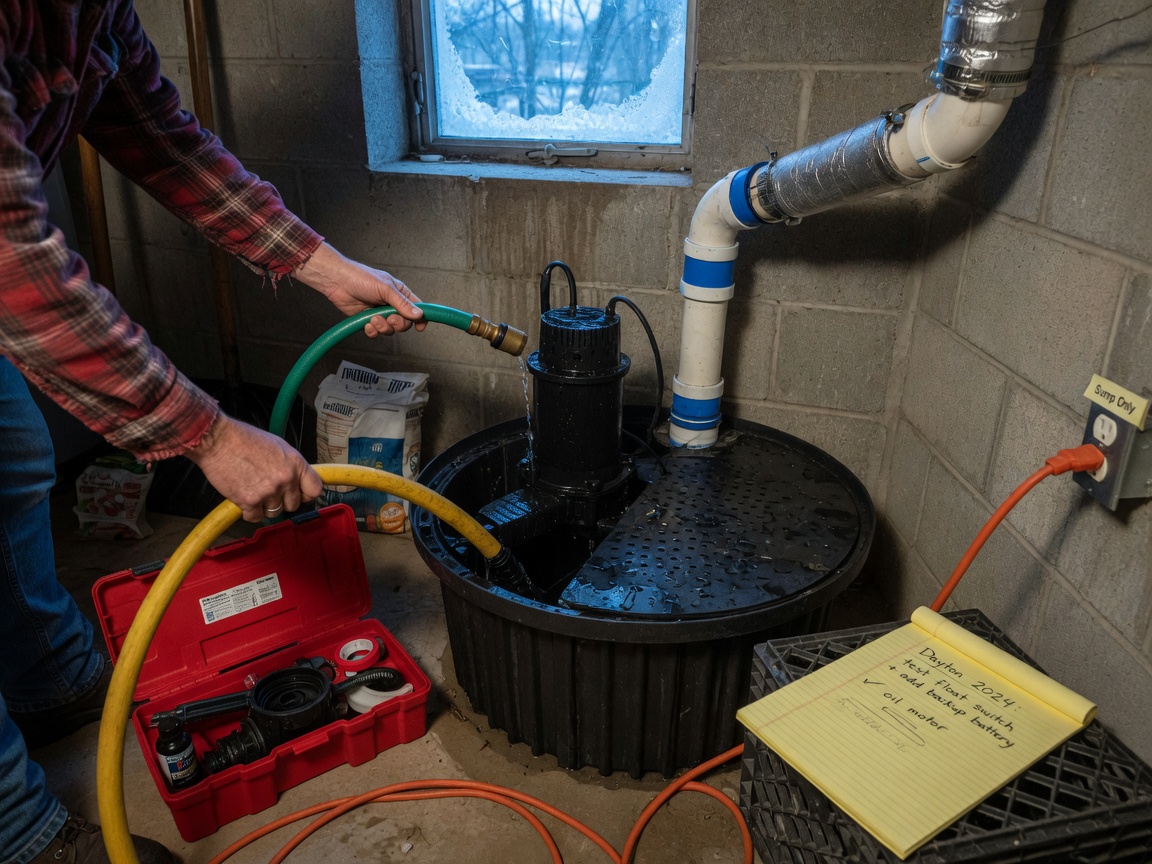
Dayton winters in Montgomery County often drop below freezing for weeks at a time, so begin preparation by clearing the discharge line of any standing water and testing the float switch before the first hard freeze arrives. Older housing stock in neighborhoods like the Oregon District and South Park features clay tile or cast-iron lines that crack when water expands inside them, while homes near the Dayton Art Institute and Carillon Historical Park sit on clay-heavy soils that retain moisture longer into December. Checking these components now prevents mid-January failures when groundwater rises after snowmelt.
Clear and Insulate the Discharge Line
Standing water left in exterior discharge pipes freezes solid once nighttime lows reach the teens, backing up the pump and flooding basements in University Row and Downtown Dayton. Walk the line from the sump pit to its outlet and remove leaves, ice chunks, or debris that accumulated during fall rains. In Kettering and Beavercreek, many lines run above grade for the final few feet; wrap those sections with foam pipe insulation rated for at least 1-inch thickness to slow heat loss. If the line terminates near a storm drain that also freezes, extend it with a flexible 2-inch hose that can be redirected to a floor drain inside an unheated garage until spring. These steps take under an hour yet directly address the most common freeze-related call in the Miami Valley.
Verify Battery Backup Operation
Power outages during ice storms leave standard sump pumps useless, so confirm the battery backup system holds a charge and the alarm sounds when the main pump is unplugged. In South Park and Oregon District homes built before 1960, sump pits often sit in low spots where water enters faster than a single pump can handle once the grid drops. Run the backup through a full cycle monthly and replace batteries showing less than 12 volts under load. Pairing this check with a battery backup sump pump system evaluation ensures the unit can handle 8–12 hours of continuous operation during prolonged outages common after heavy snow.
Address Drainage and Soil Conditions
Montgomery County’s humid continental winters alternate freeze-thaw cycles that push water through foundation cracks faster than summer rains, especially on lots with poor grading around National Museum of the US Air Force properties. Inspect the sump pit for sediment buildup that reduces capacity and clean the check valve so it seats fully after each cycle. Homes in Beavercreek often have French drains tied to the sump; verify those connections remain clear so meltwater does not overwhelm the pit. If discharge repeatedly freezes at the same spot, schedule sump pump discharge and drainage repair before December to reroute the line below the frost line.
Monitor After Early Snowmelt
Once daytime highs climb above freezing in late winter, check the pump again because rapid melt sends a second surge of groundwater into pits already stressed by cold. Listen for short cycling or unusual noises that signal a worn impeller or stuck float, common after months of intermittent operation. Residents in Kettering who experienced heavy Miami Valley rains earlier in the season can review what causes sump pump failure after heavy Miami Valley rains to understand how those events compound winter risks. A final test run on a mild day confirms everything still functions before the next freeze cycle begins.